What I Actually Spent on Flights (And What You Should Expect)
If you’re budgeting for Japan, start here:
Flights will almost certainly be your biggest expense.
In my case, about 50% of my $6,000 total trip budget went to airfare alone.
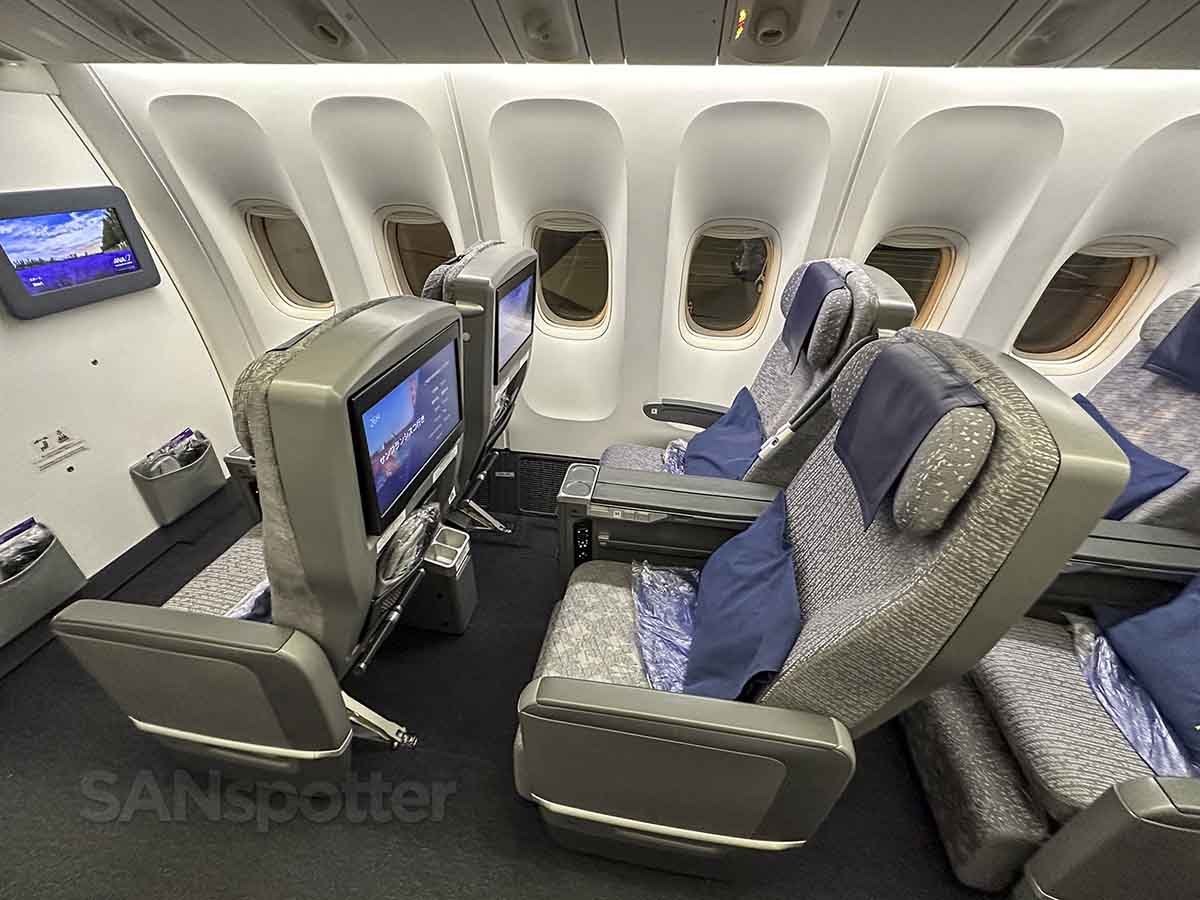
I booked my flights in December 2025 and paid roughly $2,400 for a direct flight from JFK to Tokyo on All Nippon Airways (ANA), flying into Haneda Airport.
A few important notes about that:
- This was premium economy, not standard economy
- The flight time from New York is about 12–14 hours
- And yes—it was worth it
Is Premium Economy Worth It?
Short answer: if you can afford it, yes.
A 12+ hour flight is not the place to try and save a few hundred dollars if it means being miserable the entire time.
Premium economy typically gets you:
- More legroom
- Wider seats
- Better recline
- Better overall experience
You’re starting your trip the moment you get on the plane. Being slightly more rested when you land in Japan makes a bigger difference than people expect—especially when you lose a day traveling there AND you’re dealing with jet lag.
Why Flying Into Haneda Matters
If you have the option, choose Tokyo Haneda Airport over Tokyo Narita.
Here’s why:
- It’s much closer to central Tokyo
- Shorter, cheaper train or taxi ride (45 mins on the train from Haneda versus 1+ hours from Narita)
- Easier overall arrival after a long flight
After 13 hours in the air, the last thing you want is another long commute into the city.
Flight Booking Tips (That Actually Help)
1. Book Earlier Than You Think
Japan isn’t exactly a hidden destination—flights fill up and prices climb quickly.
A good rule:
- 3–6 months in advance for decent prices
- Earlier if you’re traveling during peak seasons (spring cherry blossoms, fall foliage)
- Pro Tip: If you’re traveling to Japan in May like I did, avoid going the first week of May. From the end of April to the first week of May is Golden Week in Japan, in which a series of national holidays (often back to back) occurs, and most people take that week off. As such, domestic travel in Japan, especially on planes and trains is significantly higher than normal. Go after Golden Weeks (I arrived the day after Golden Week ended as reference).
2. Be Flexible With Dates (If You Can)
Even shifting your trip by a few days can make a noticeable difference in price. In my case, I had to be somewhat rigid with my trip, because I had a board exam to prepare for in July.
Midweek departures are often cheaper than weekends, and I left on a Wednesday to Japan, and came back on a Thursday from Japan.
3. Set Price Alerts
Use tools like:
- Google Flights
- Hopper
Track routes and wait for price drops instead of guessing.
4. Decide What You Care About: Price vs Comfort
You’ll usually be choosing between:
- Cheapest flight (long layovers, economy)
- Balanced option (1 stop, reasonable timing)
- Premium/direct (most expensive, least hassle)
There’s no “right” answer—but be honest with yourself about what matters.
For me, direct + premium economy was worth the extra cost because:
- No layovers
- Less travel fatigue
- Easier arrival
- A higher ticket price CAN come with some perks. In the case of my premium economy ticket on ANA, I had lounge access in both JFK and at Haneda, and both lounges have showers that you can reserve. It seems trivial, but feeling refreshed before being stuck in a crowded tube for 12-14 hours makes a huge difference.
The Reality Check
You can absolutely get to Japan for less than what I paid.
But the trade-offs usually include:
- Longer travel time
- Less comfort
- More complicated itineraries
If this is a once-in-a-while trip, it’s worth thinking carefully about where you want to save money—and where you don’t.
The Takeaway
- Flights will likely be your biggest expense
- Expect anywhere from $1,000–$2,500+ depending on timing and comfort
- Direct flights and better seats cost more—but can significantly improve your experience
Added Bonus: Extra Flight Tips for Northeast U.S. Travelers
If you’re based in the Northeast (New Jersey, NYC, Philly area), this is something most guides won’t tell you—but it can save you a significant amount of money.
1. Newark vs JFK: Don’t Assume the Closer Airport Is Cheaper
My first instinct was to fly out of Newark Liberty International Airport since it’s much closer to me.
But after comparing prices with John F. Kennedy International Airport, I noticed something important:
- Flights out of Newark were consistently about $500 more expensive per ticket
A big reason for this is that United Airlines has (or at least had) a strong hold on direct Japan routes from Newark, which tends to keep prices higher.
2. Even With Transportation, JFK Can Still Be Cheaper
At first, JFK feels like a hassle if you live in New Jersey. But when you run the numbers, it can still come out ahead.
- Uber/taxi to and from JFK: roughly $400 round trip
- Savings on airfare: about $500
You’re still coming out ahead financially—and that’s before factoring in better flight options.
3. Choosing a Japanese Airline Makes a Difference
When flying to Japan, your main non-U.S. airline options are:
- Japan Airlines (JAL)
- All Nippon Airways (ANA)
I deliberately chose ANA, and it was slightly cheaper than JAL at the time.
But the bigger reason was this:
The service quality is noticeably better.
Japan has a very high standard for customer service, and that absolutely carries over to their airlines. On a 12–14 hour flight, that difference matters more than you’d expect.
4. Haneda vs Narita: The Hidden Advantage
Another major factor:
- Flights on ANA and JAL out of JFK typically land at Tokyo Haneda Airport
- Flights on United out of Newark usually land at Tokyo Narita International Airport
And this is a big deal.
Haneda is significantly closer to central Tokyo, which means:
- Shorter commute after landing
- Less time navigating trains while exhausted
- Easier overall arrival experience
5. The Trade-Off (And How to Think About It)
So your real choice looks like this:
Option 1: Newark
- Closer departure airport
- Higher ticket prices
- Likely landing in Narita (farther from Tokyo)
Option 2: JFK
- Longer trip to the airport
- Cheaper flights
- Better airline options (ANA/JAL)
- Arrival at Haneda (much more convenient)
For me, the JFK option was the clear winner—but it’s worth weighing based on your own situation.
The Bottom Line
- Don’t default to the closest airport—compare prices carefully
- Factor in transportation costs, but don’t overestimate them
- Japanese airlines are worth serious consideration for long-haul comfort
- Where you land in Tokyo (Haneda vs Narita) can meaningfully impact your first day
 Japan For Idiots
Leave a comment